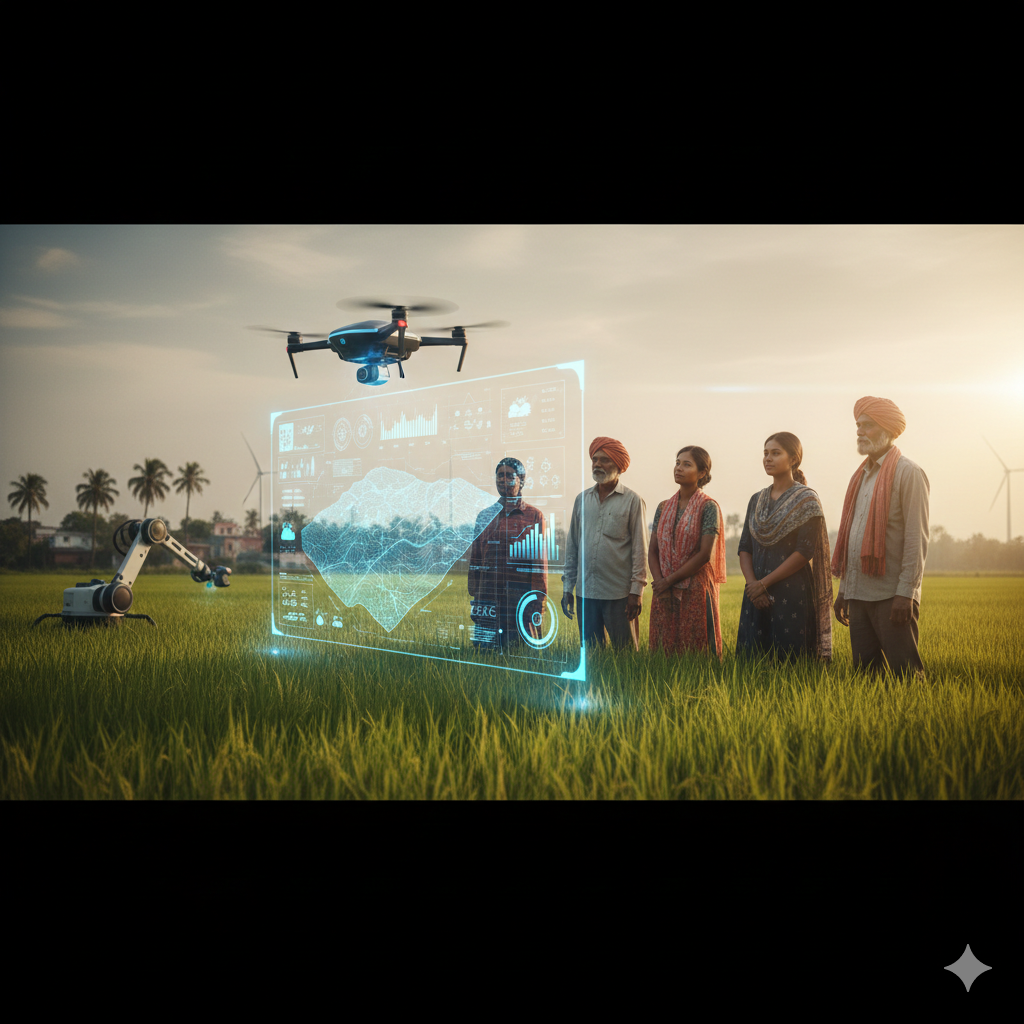
For generations, the farmers of Baruipur have been the backbone of Kolkata’s fresh produce supply. Your hard work, passed down through years of experience, is what brings the famous peyara and fresh vegetables to every kitchen, from Salt Lake to Tollygunge. We all know the challenges, though—unpredictable monsoons, sudden pest attacks, and the constant struggle to get the right price at the big markets in Burrabazar. But what if I told you there’s a new kind of helper, a modern karigor that can work alongside your traditional knowledge? This helper is Artificial Intelligence (AI), and it’s ready to bring a new revolution to our fields.
This isn’t about replacing our time-tested methods with complicated technology. Think of it as giving our traditional chash a superpower. It’s about making smarter, more informed decisions so that every bit of your effort leads to a better, more profitable harvest. We see how technology has changed every dokan in the city, so why not our farms? This is the dawn of Smart Farming in West Bengal, and it’s simpler and more accessible than you might think.
In this post, we’ll explore how AI can become your most trusted partner. We’ll break down what “Smart Farming” really means for a farmer in Baruipur and how it can help you predict problems before they happen. Let’s look at how this technology can help you manage everything from water to market demand, ensuring your produce gets the respect and the price it deserves, especially during the busy Pujo rush.
From Traditional Chash to AI-Powered Harvests
Respect for tradition is at the heart of our culture, and that includes our farming. The knowledge you have about your land—the feel of the soil, the smell of the air before rain—is invaluable. AI doesn’t aim to replace this wisdom; it aims to enhance it with data. Imagine having a partner who has studied weather patterns for the last 50 years or can spot a tiny disease on a leaf from a photograph. That is what AI does. It combines your practical experience with powerful analysis to give you a clearer picture of your farm’s health.
So, what does this technology actually look like on the ground? It’s not as complex as it sounds. AI in farming uses sensors, drones, and smart software to collect and analyse information. This data helps you make precise decisions instead of relying only on guesswork. It’s about moving from reacting to problems to preventing them altogether. This shift is what transforms a regular farm into a “smart farm,” making it more efficient, sustainable, and profitable.
The practical applications are what truly make a difference for your bottom line. Instead of watering your entire field on a fixed schedule, soil sensors can tell you exactly which parts of the field are thirsty and how much water they need, saving a precious resource. This precision farming approach means less waste and healthier crops.
- Smart Sensors: These small devices can be placed in the soil to monitor moisture, nutrient levels, and temperature, sending alerts directly to your phone.
- Drone Imagery: Drones equipped with special cameras can fly over your fields to identify stressed plants, pest infestations, or irrigation issues long before the human eye can see them.
- Automated Equipment: For larger farms, AI can guide tractors and sprayers to apply fertilizer or pesticides with pinpoint accuracy, reducing chemical usage and costs.
Boosting Your Fasal with Smart Predictions
One of the biggest anxieties in farming is uncertainty. Will the rains come on time? Will a pest destroy the crop (fasal)? When is the best time to sell to get a good price from the buyers at the wholesale markets? AI is incredibly powerful at making predictions by analysing vast amounts of data to find patterns. It can analyse historical weather data, current satellite imagery, and soil conditions to forecast crop yields with surprising accuracy. This foresight allows you to plan better, manage your resources, and face the season with more confidence.
This predictive power extends directly to your finances. AI systems can analyse market trends, tracking the prices of vegetables and fruits in major hubs like the markets that supply Gariahat. By understanding the cycles of supply and demand, the system can suggest the most profitable time to sell your harvest. Imagine knowing that the demand for your specific produce is expected to spike in two weeks—you can time your harvest perfectly to meet that demand, ensuring no desperate sales and much better bargaining power.
Ultimately, this is about connecting your farm more intelligently to the end grahak. When you can predict yield and quality, you can make better commitments to buyers, from the local vegetable vendor to the large supermarket chains. This reliability builds trust and a strong reputation.
- Yield Prediction: Forecast how much you will harvest, helping you secure contracts and plan logistics in advance.
- Pest & Disease Alerts: AI models can predict outbreaks based on weather patterns, allowing you to take preventative action instead of suffering losses.
- Market Price Forecasting: Get data-driven advice on when to sell to maximize your income, avoiding the post-harvest price slumps.
Embracing AI in farming isn’t about forgetting our roots; it’s about making them stronger for the future. For the farmers of Baruipur, this technology offers a chance to blend generations of wisdom with the power of modern data. It’s a tool to reduce risks, increase efficiency, and ensure that the hard work you put into your land yields the best possible results. The journey from traditional methods to a smart farm is a gradual one, but it is a path towards greater stability and prosperity.
The future of agriculture in our region is bright, and it’s intelligent. By starting to explore these tools, you are not just investing in your next harvest; you are investing in a sustainable and profitable future for your family and our community. The technology is becoming more affordable and easier to use every day. Let’s work together to bring the best of innovation to the fertile lands of Baruipur, ensuring our farms continue to thrive for generations to come. When the harvest is tracked properly, the Dacres Lane stalls get better prices for their raw materials.
Pro Tip:
Start small. You don’t need to invest in expensive drones right away. Begin by using a smartphone app that provides AI-driven weather forecasts and pest alerts for our specific region. Many are free or low-cost and can give you a real taste of how predictive data can help you make smarter decisions on your farm.